
About CARE
Overview of Participation and Evolution (2018–2026)
The Climate Adaptation & REsilience Conference (CARE) is an HKUST-convened platform that connects weather and climate science, particularly high-impact extremes, with infrastructure systems, public health, finance, and governance. CARE is not designed as a purely academic meeting. It is structured as a forum where scientific insight on extreme weather and climate risk is examined directly alongside operational authorities and senior decision-makers responsible for infrastructure, urban systems, financial stability, and public policy. A defining feature of CARE is its combination of scientific depth and senior-level participation.
By bringing together leading researchers, government officials, infrastructure operators, financial institutions, insurers, and industry practitioners within a shared setting, CARE enables substantive dialogue across disciplines and sectors. The platform is designed to strengthen mutual understanding between science and practice — ensuring that climate knowledge informs real-world decision-making, and that operational challenges shape research priorities.
CARE2018
Extreme Weather and Urban Risk
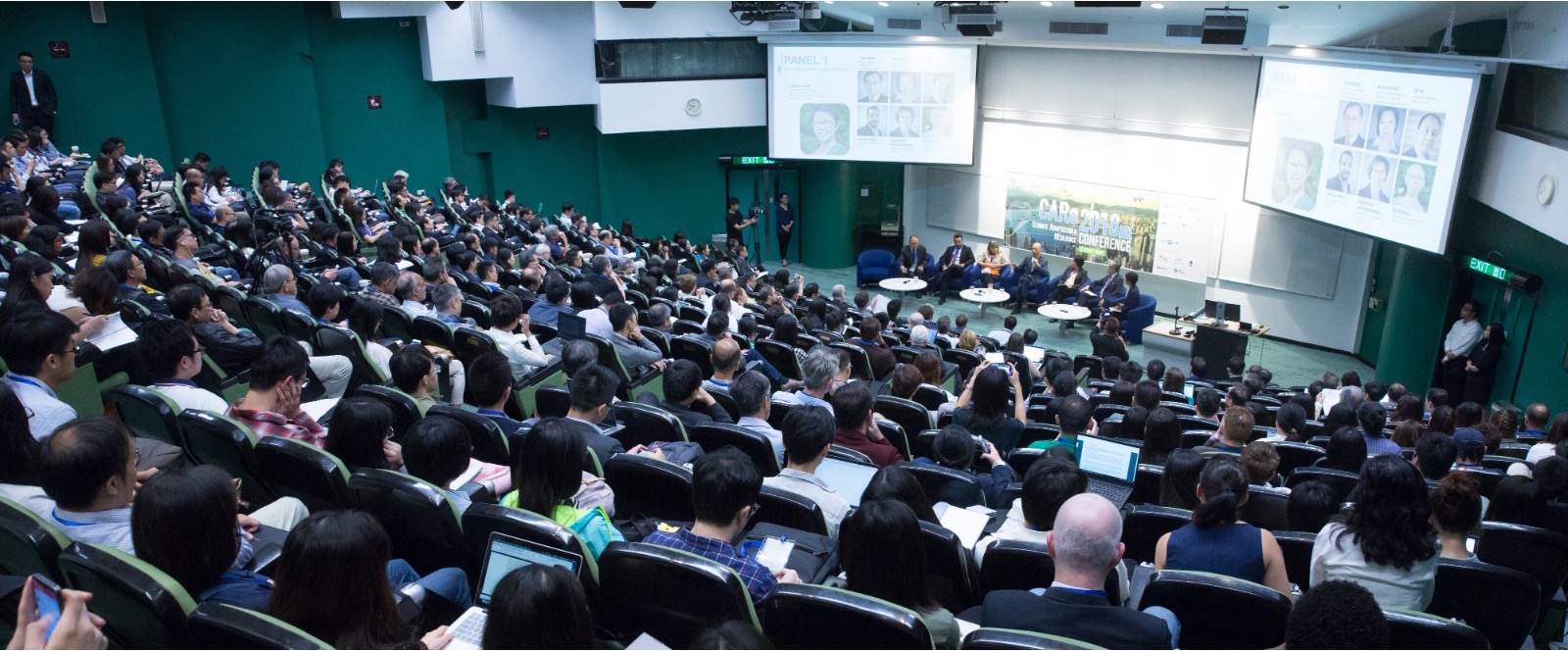
CARE2018 explored how advances in meteorology and climate science translate into infrastructure standards, emergency preparedness, and public policy in dense, high-exposure urban environments.
Key areas of discussion included:
- Typhoon intensification and storm surge risk
- Extreme rainfall and flood exceedance
- Landslides in steep, high-density terrain
- Sea-level rise interacting with episodic storm events
- Oceanic and freshwater system stress
- Public health implications of extreme weather
- Infrastructure design under non-stationary climate conditions
Adopting the risk framework of hazard × exposure × vulnerability, CARE2018 examined how meteorological hazards evolve into societal risk through infrastructure exposure and institutional capacity — establishing the foundation for subsequent CARE gatherings.
CARE2022
From Hazard Events to
System Stress
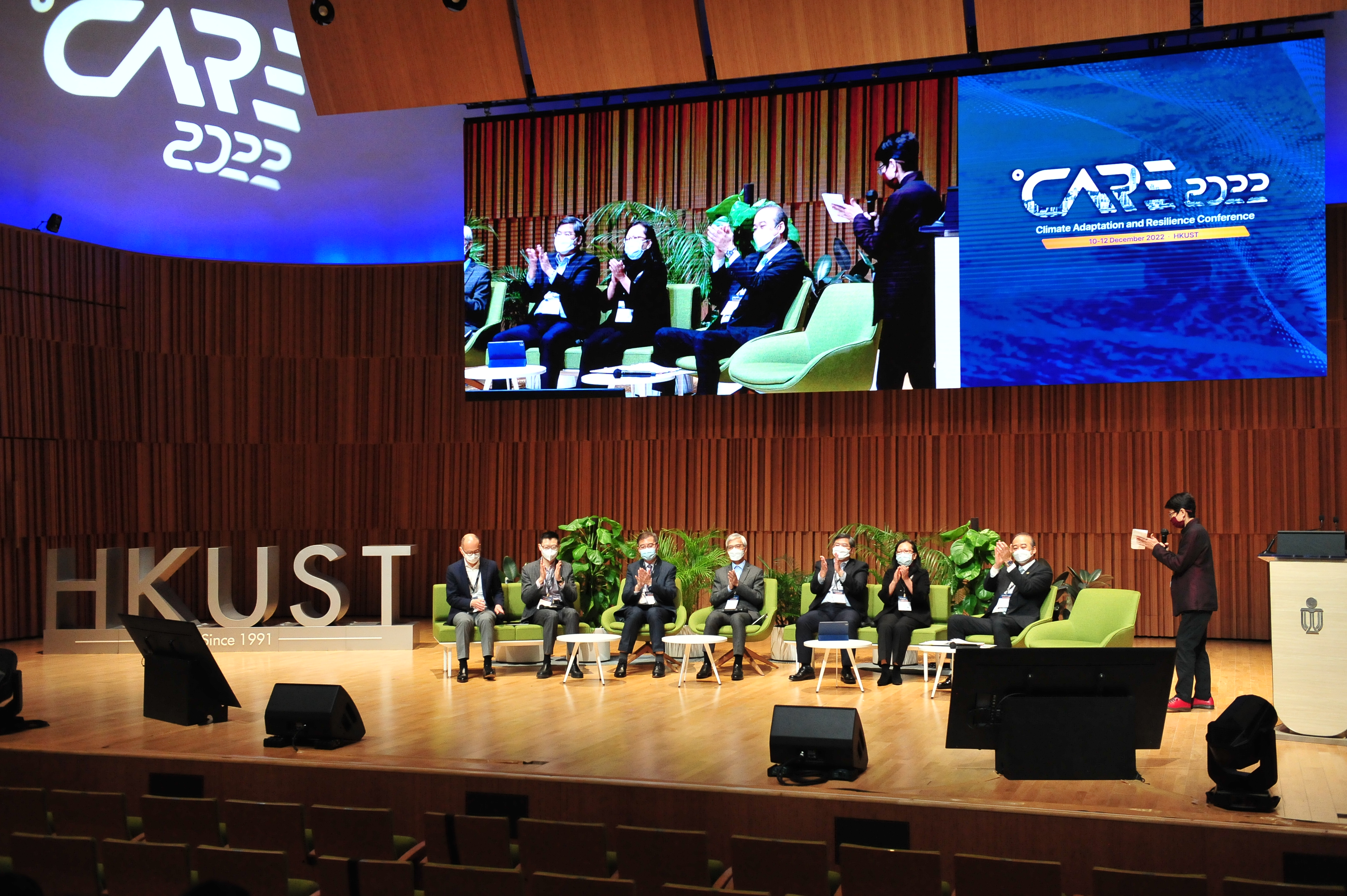
CARE2022 moved beyond individual hazards to examine compound and cascading risks across interconnected urban systems, recognising that climate extremes increasingly interact rather than occur in isolation.
The conference explored high-impact rainfall and flood modelling, urban heat stress and compound humidity risk, the interaction between heat, air quality, and health outcomes, infrastructure interdependence and cascading failures, forecast-to-action gaps, and the implications of risk pricing and financial exposure.
Bringing together internationally recognised scientists, senior regulators, infrastructure leaders, regional policymakers, insurance executives, sustainable finance professionals, and urban modelling experts, CARE2022 strengthened the link between atmospheric science, operational systems, and financial decision-making — while maintaining senior-level engagement across sectors.
Across 2018 and 2022, CARE evolved from identifying vulnerabilities to extreme weather toward examining how atmospheric signals propagate through interconnected infrastructure networks, institutional frameworks, and financial systems.
The dialogue progressively deepened, linking prediction with system design, operational readiness, and long-term governance and investment choices.
CARE2026
Extreme Weather and Urban Risk
CARE2026 advances the CARE dialogue to its next phase. As extreme rainfall intensifies, heatwaves lengthen, and compound events become more frequent, urban systems - transport, drainage, power, health, housing - and finance are increasingly exposed to stresses they were not designed to withstand.
Structured around the progression
Atmospheric Signal → System Stress → Societal Choice,
CARE2026 examines how weather and climate extremes cascade through dense urban regions, and how institutions, communities, and markets respond.
Moving beyond hazard identification and system interdependence, CARE 2026 focuses on how escalating climate pressures translate into governance decisions, infrastructure priorities, financial trade-offs, and long-term adaptation pathways.
Learn about CARE2026 Conference Structure